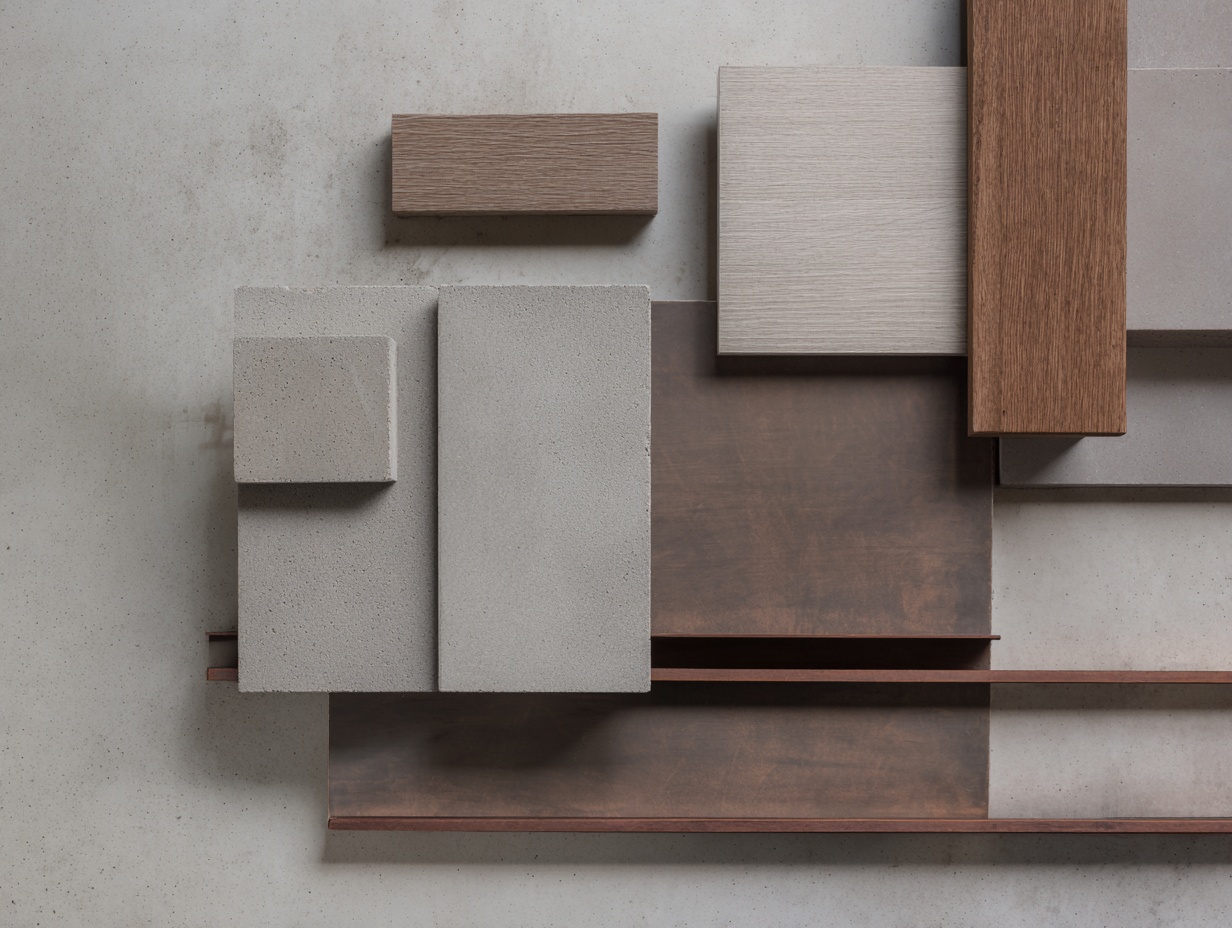
Material selection is one of the most consequential decisions in architectural design. The materials we choose define not only the visual character of a building but also its tactile quality, its relationship to light, and its performance over time.
At Join.T, we approach material palettes with restraint and intention. Rather than deploying a wide range of finishes, we prefer to work with a limited set of carefully selected materials—typically three to five primary materials that can be combined in various ways throughout a project.
Starting with Context
Every material palette begins with an understanding of site and context. What materials are native to the region? What is the vernacular tradition? How does light behave in this location? These questions inform our initial material studies and help establish a connection between the building and its environment.
Considering Light and Time
Materials age. This is not a flaw but a feature. We select materials that weather gracefully—that develop patina, that record the passage of time, that become richer rather than merely worn.
"The best materials are those that improve with age, that tell a story, that reveal the hand of the maker and the forces of nature."
Craft and Detail
Material selection cannot be separated from questions of craft and detail. How will materials meet? How will they transition from interior to exterior? What reveals or recesses will define these connections?
We spend significant time on these junctions—the place where concrete meets wood, where glass meets stone, where one plane becomes another. These moments are opportunities to express precision and care, to reveal the logic of construction, to demonstrate that materials have been thoughtfully considered at every scale.
Conclusion
A well-considered material palette is fundamental to architectural quality. It establishes character, ensures coherence, responds to context, and ages gracefully. By working with restraint, by understanding how materials behave over time, and by attending carefully to craft and detail, we create buildings that feel both contemporary and timeless.